 |
Quarr and BinsteadIsle of Wight |
Please click thumbnails for larger picture.
Old postcards are sometimes poorly produced and grainy, I've done my best to scan them.
Dates are from the card or my estimate (where possible). The maker of the card is shown in brackets (where available).
All pictures on this page are from my own collection, but are not my copyright. If you wish to repost or reuse them would you please out of courtesy let me know.
|
|
|
|
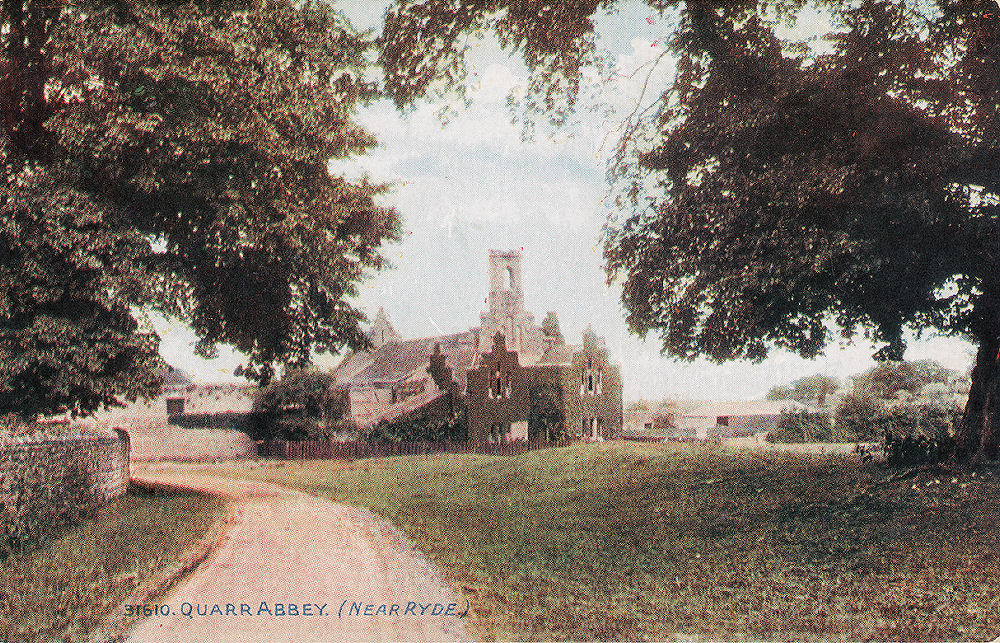
The abbey, Quarr 1936. (Valentines) |
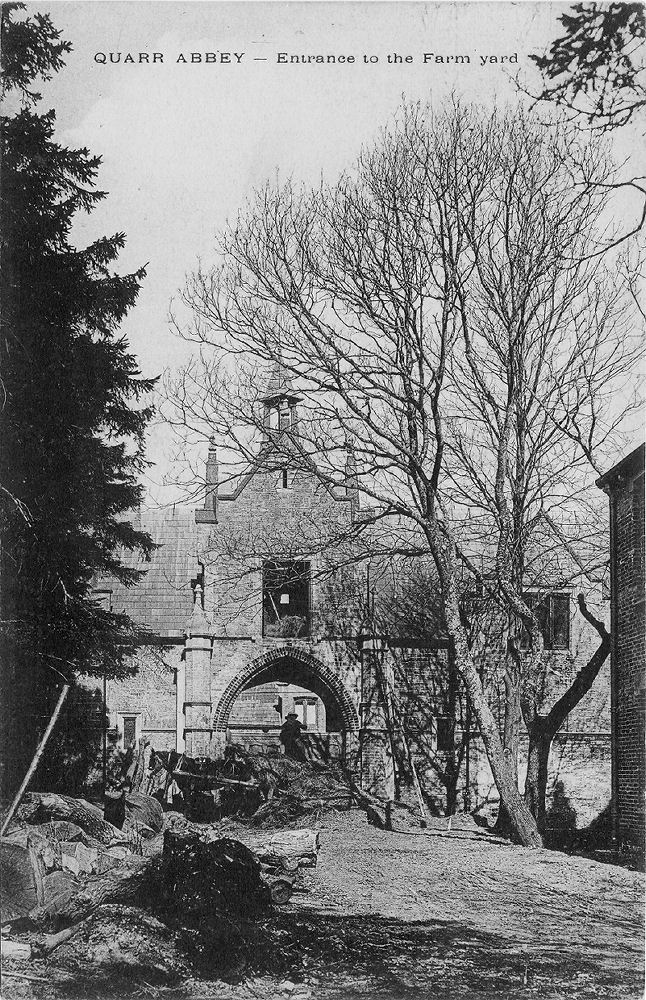
An unusual card showing the entrance to the farm yard at Quarr, postmarked 1909. |

|
|
|
|
The inside of Quarr Abbey (described as 'Church of Our Lady of Quarr'), probably from the 1930's. |
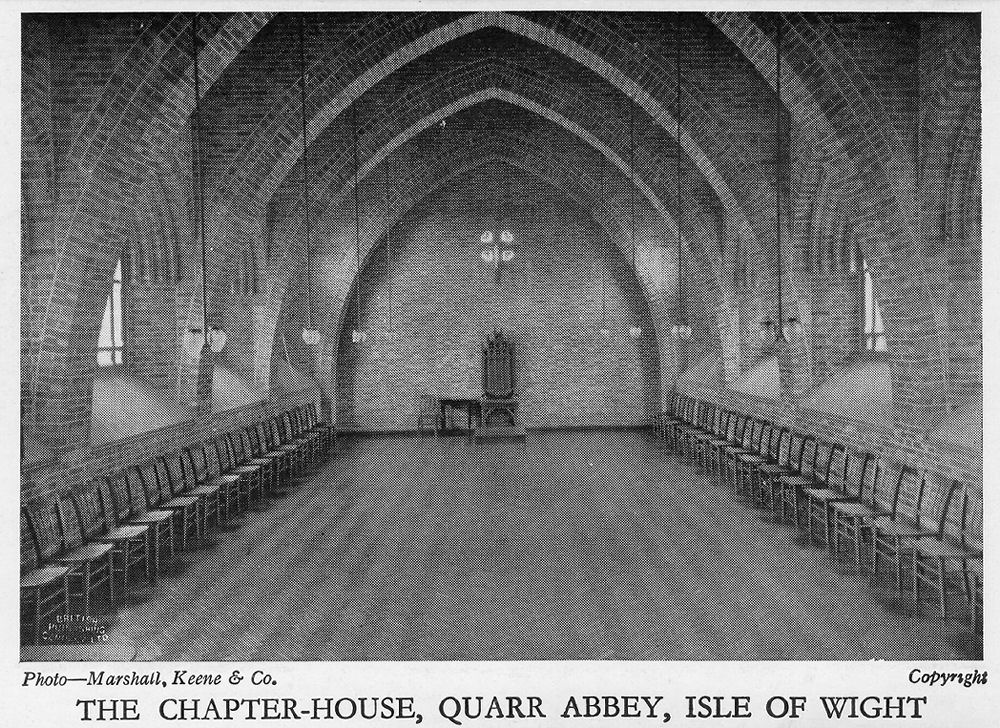
The Chapter House, Quarr Abbey. (British Publishing Co.) |
|
|
|
|
The ruins of the old Quarr Abbey. (Photochrom) |
A closer view of Quarr old abbey ruins, undated. The existing Abbey may be seen in the background. |
 |
 |
|
Artistic view over the ruins of the old abbey and Solent, about 1910. (Tuck) |
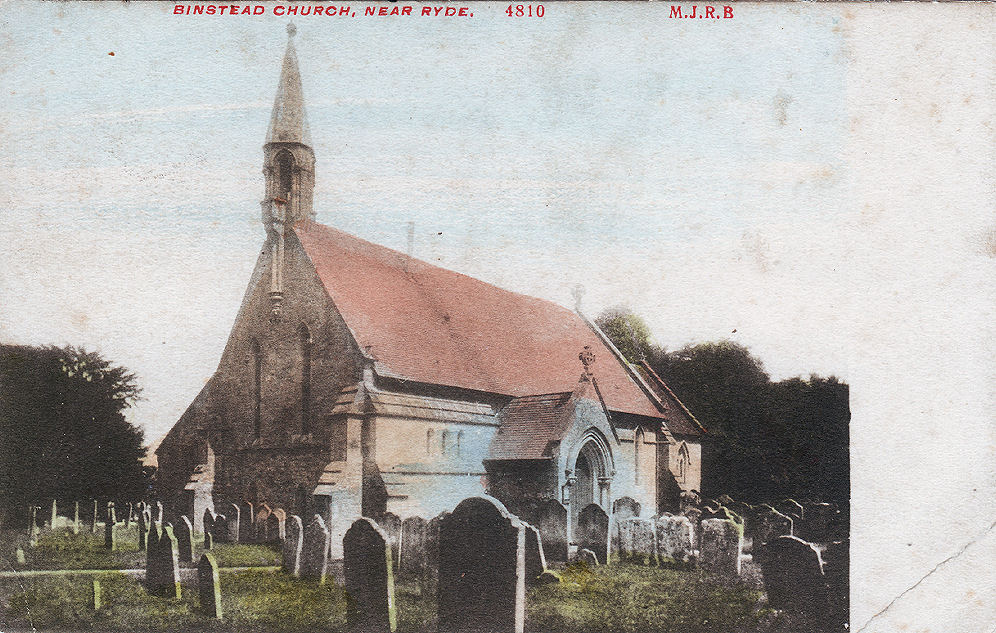
Binstead, Church of the Holy Cross, around 1905. |
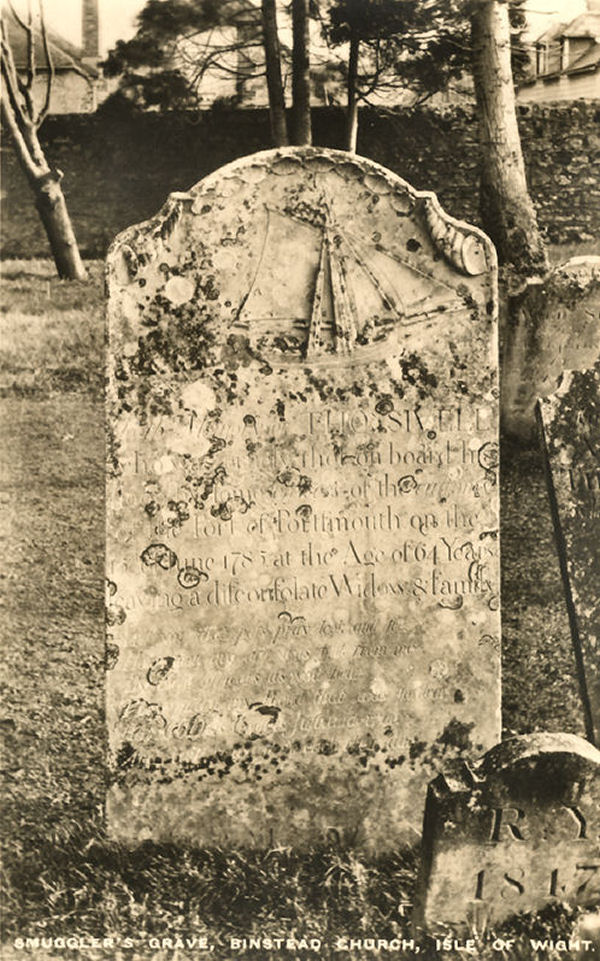 |
The picture, right shows the gravestone of Thomas Sivell in Binstead churchyard. The inscription reads: To the memory of THOs SIVELL who was cruely fhot on board his floop by fome officers of customs of the Port of Portfmouth on the 15th June 1785 at the age of 64 years leaving a difconfolate widow & family. All you that pafs pray look and fee How foon my life was took from me By those officers as you hear They fpilled my Blood that was fo dear But God is Good and juft and true And will reward each to their due Note: At this time an 'f' was often used in place of an 's' in the English language
|